There is a quiet problem in most small businesses. The person who knows how something is done is often the only person who knows how it is done. When they are on leave, or they move on, the process leaves with them. Everyone has felt this. The month-end that only one person can run. The onboarding that lives in someone's memory. The workaround nobody ever wrote down.
The usual fix is "write an SOP." And the usual reason it does not happen is that writing one from a blank page is genuinely hard. You have to remember every step, put them in order, catch the edge cases, and make it readable. So it stays on the to-do list, and the knowledge stays stuck.
I wanted to test a different idea about where AI fits here. Not AI that invents your process. AI that gets the one you already run out of your head and into a usable document. So over a build weekend, I made ProcessKit.
What it does
It interviews you. Name the process. Define where it starts and finishes. List the inputs. Map who is responsible. Capture the decisions and the exceptions. Set the bar for what "done well" looks like. You answer in plain words, one step at a time. Then it turns your answers into a clean, structured, PDF-ready SOP.
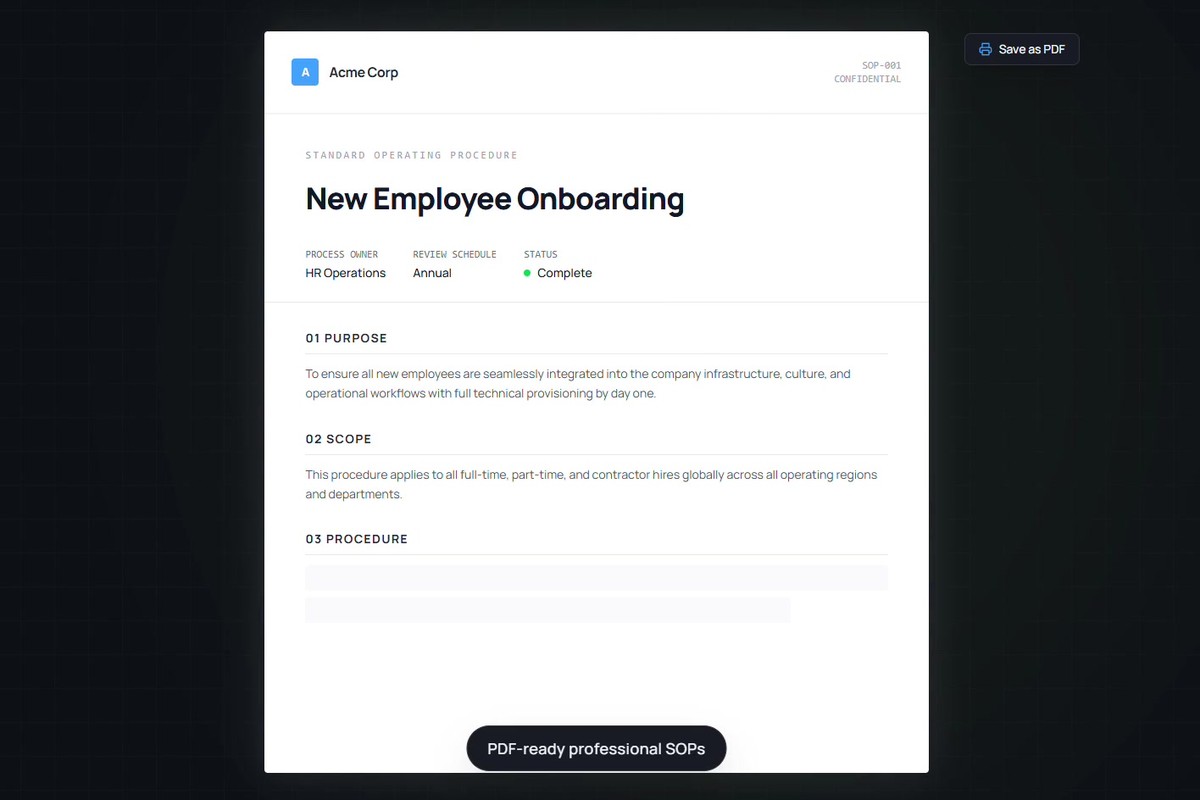
The point I wanted to prove
Here is the line the tool opens with, and the whole idea behind it: your processes already exist. They are just stuck in people's heads.
The human is the source of truth. The AI is the structure. That distinction is the whole thing, and it is exactly what I tell teams when I build AI playbooks for them. The teams that get value from AI are not the ones that hand it the thinking. They are the ones that keep the thinking, and use AI for the organising, the drafting, the tidying, the parts that are slow but not clever.
What building it taught me
Building the tool taught me the same lesson from the other side. The parts that made it work were not clever prompts. They were discipline. Plan before building. Keep a human deciding at each step. Move in stages you can check. Hold the scope, and resist the urge to let it sprawl. That is the same advice I put in every playbook, and it was good to be reminded that it holds just as well when you are the one building.
I am not an app company, and ProcessKit is not a product I am selling. It was a proof, mostly to myself, that the AI advice I give is grounded in actually building with this stuff, not just talking about it. The tools I make for a living are dashboards, decks, SOPs and training. This was a weekend of testing an idea. But the idea underneath it is the one I keep coming back to.
This is the thinking behind the AI adoption work I do. If your team knows AI could help but has no system for it, start a project and I will map a playbook around your actual tasks.